 OpenProgram Docs
事件层#
全框架唯一的统一事件流。proactive 只是它的第一个消费者。
为什么:没有这一层时,框架里"发生了什么"的信号散在六套互不相通的机制里(agent loop 的
AgentEvent 流、auth 的 _emit、context 的 on_event、channels 的 WS 广播、memory 的周期轮询、
store 的普通日志)。想"在某个时机做点什么",得先弄清那个时机归哪套机制管、怎么挂进去。这一层把
它们统一成一条总线:源往里 emit,消费者从里 subscribe。
事件层共十个部件,各自的落位:
| # | 部件 | 位置 |
|---|---|---|
| 1 | 集中注册表(EVENTS) |
openprogram/events/registry.py |
| 2 | Event 对象 | openprogram/events/bus.py(Event、make_event) |
| 3 | 类型化派发:notify + gate | EventBus.emit / EventBus.emit_gate |
| 4 | 订阅管理 | EventBus.subscribe / EventBus.subscribe_gate |
| 5 | 错误语义 | notify 隔离、gate fail-open(§4) |
| 6 | 否决协议 | Python 返回值 / shell 退出码(§5) |
| 7 | 事件日志 | openprogram/events/event_log.py——每会话 events.jsonl,自动轮转(§6) |
| 8 | 线程模型 | 闸门在发射方线程同步执行(§4) |
| 9 | 可观测性 | gate 结论记在事件日志行上(§6) |
| 10 | 准入边界 | 注册表本身;registry.py 模块 docstring |
事件相关的一切都收在 openprogram/events/ 包里,所有 import 一律走
from openprogram.events import ...。
1. Event 模型#
三个核心字段(发生了什么 + 内容 + 时间)固定;关联信息进开放的 metadata 口袋,不做硬编码字段。
@dataclass(frozen=True)
class Event:
    id: str          # 唯一 id
    ts: float        # 发生时间
    type: str        # 哪类事件,见 §2
    origin: str      # 谁触发的:user / agent / tool / system / proactive
    payload: dict    # 事件内容(命令、文件路径、哪个账号被限流……)
    metadata: dict   # 开放口袋:{"session":..., "turn":...},需要才填
session/turn 进口袋而非固定字段:它们不是事件的固有属性,是外挂的关联,且对一半事件(auth、 channel)根本没有意义。开放 dict 也让以后新增关联维度不用改模型。
make_event 自动补 id/ts,并在 dispatcher 驱动的轮内从 store ContextVar 取 session/turn 关联;
显式传入的 metadata 键覆盖自动值。
2. 注册表——准入边界#
openprogram/events/registry.py 里 EVENTS = {name: EventSpec(kind, payload_doc)}。一个事件
类型进注册表,唯一的理由是有真实消费者要响应它——不是因为代码恰好路过那里。这与 bridges.py
对 B 类源的原则同源,也是事件流不腐化成垃圾场的关键。
已登记的事件:
| type | kind | payload | 发射点 |
|---|---|---|---|
tool.before |
gate | {tool, tool_call_id, args} |
agent_loop._execute_tool_calls,每次 tool.execute() 之前 |
tool.after |
notify | {tool, tool_call_id, is_error, result_text} |
agent_loop._execute_tool_calls,每次工具调用结束之后 |
turn.stop |
gate | {session_id, user_msg_id, assistant_msg_id, last_text(≤4000 字), stop_hook_active} |
dispatcher.process_user_turn,仅无会话目标的会话 |
turn.start |
notify | {session_id, user_msg_id, assistant_msg_id} |
dispatcher,用户消息落盘之后 |
turn.end |
notify | {session_id, user_msg_id, assistant_msg_id, usage} |
dispatcher,finalize 之后 |
session.start |
notify | {session_id, agent_id, channel} |
webui 会话创建(server.py) |
chat.before_send |
notify | {session_id, msg_id, text, agent_id, attachments} |
ws_actions/chat.py,用户消息落盘之后、进入 runtime 之前 |
plugin.enable |
notify | {plugin} |
plugins/loader.py,插件加载完成、hook 订阅注册之后 |
plugin.disable |
notify | {plugin} |
plugins/loader.py,插件的注册项被摘除之前 |
goal.update |
notify | {session_id, goal: {text, status, turns_used, max_turns, last_reason, last_question}} |
goal._emit_goal_update |
user.prompt_submitted |
notify | {msg_id, chars} |
dispatcher/prep.py,用户行落盘后 |
model.response_started / model.response_completed |
notify | {} / {is_error} |
agent_loop,循环内每次模型响应 |
file.changed |
notify | {path, op} |
write / edit / apply_patch 工具 |
question.asked |
notify | {session_id, question, ...} |
agent/questions.py |
context.compacted |
notify | {ok, tokens_before, tokens_after, ...} |
context/engine.py |
memory.ingest_started / memory.ingest_ended |
notify | {messages} / {ok, retryable, reason} |
memory/session_watcher.py |
channel.message_inbound |
notify | {channel, peer_kind, chars} |
channels/_conversation.py |
branches.listed / sessions.listed |
notify | {session, count} / {count} |
agent-collab 的列表工具 |
skills.changed |
notify | {} |
skills watcher(server.py) |
plugins.update_available |
notify | {plugin, current, latest} |
插件更新检查(server.py) |
代码里每个 emit_safe 的 type 字符串都已入册——有测试强制这个子集关系
(test_every_emitted_type_is_registered)。emit 未注册的 type 每个只 log.warning
一次(不抛),用来暴露绕过注册表的新发射点。
3. 两种派发#
notify(默认,异步):emit(event) 扇出给 subscribe(handler, types={...}) 的订阅者,发完
即走。发射方永不等待;订阅者再慢再坏也拖不慢框架。
gate(同步否决):emit_gate(event, timeout_s=None) -> GateOutcome{allowed, reasons} 在发射
方线程里按注册序逐个调用该 type 的 subscribe_gate(type, fn) 订阅者。任一返回理由即
allowed=False,理由聚合。subscribe_gate 与 subscribe 一样返回注销函数。
闸门规则:
- 必须快。 闸门挡在动作的路中间——不许调 LLM、不许慢 IO。
- 防重入:同线程内嵌套
emit_gate同一 type 直接放行并 warning,闸门不可能把自己闸成死循环。 timeout_s是软性总预算:超出后剩余闸门跳过(fail-open)并 warning。- 对 subagent 同样生效:
tool.before位于 permission_mode 审批包装之外,permission_mode="bypass"关不掉它。
4. 错误语义与线程模型#
- notify 订阅者抛异常:隔离——记日志、其余订阅者照跑、发射方无感。
- gate 订阅者抛异常:fail-open——写 stderr、按放行处理。一个闸门的 bug 不能砖掉所有工具调用。
- shell 订阅者必有超时(默认 60 秒,逐条可配);超时按 fail-open 记 warning。
- 闸门在调用方线程同步执行;notify 处理器也在发射方线程调用(async 处理器有运行中的 loop 时调度上去)。
5. 否决协议#
Python 闸门函数(ToolGate 签名):返回 None 放行、理由字符串否决。合并后的理由回到动作方——
tool.before 经 ToolGateDenied 变成模型收到的 error tool result;turn.stop 变成
[hook] <理由>。继续。 的续轮提示词。
shell 订阅者沿用 Claude Code hooks 的退出码协议。Event 以 JSON 形式从 stdin 进来。
| 退出码 | 含义 |
|---|---|
| 0 | 放行 |
| 2 | 否决;stderr 即理由 |
| 其他 | fail-open,记 warning |
shell 订阅者来自 config.json 顶层 hooks 键(config_schema.py 登记为 hooks 设置项):
{
  "hooks": {
    "turn.stop": [{"command": "python check_done.py", "timeout": 30}],
    "turn.end":  [{"command": "notify-send 'turn finished'"}]
  }
}
worker 启动时 openprogram.events.install_config_hooks()(shell_hooks.py)逐条注册:gate 型
事件挂同步 shell 闸门,notify 型事件挂后台执行器(daemon 线程、忽略退出码、失败只记日志)。改
配置重启 worker 生效。
turn.stop 续轮循环#
dispatcher/stop_hook.continue_stop_hook_turns 只在没有会话目标的会话上、每个完成的轮之后问
turn.stop 闸门。分工:有 goal 的会话只有一个停止决策者——它自己的 goal 循环,外部干预只有
/goal clear;turn.stop 闸门是无 goal 会话的扩展点。被否决则再跑一轮——构造方式与 goal 续轮
同款(dataclasses.replace、source="hook_continue"、INHERIT_PARENT),跑完对新结果再问闸门。
防失控是 stop_hook_active 标志协议(同 Claude Code / Codex 的 stop hook——没有数字上限):首问
之后每次 payload["stop_hook_active"] 为 True,hook 由此知道自己已经强制续过轮,应当放行。轮
失败/被取消不再问闸门直接返回。head 移动始终走每轮内部正常的 TurnWriter 路径。
6. 事件日志#
进程级总线把每个完成派发的类型化事件追加为一行 JSON,常开:
- 事件带 session 且该会话目录存在时:
~/.openprogram/sessions/<sid>/events.jsonl; - 否则:
~/.openprogram/logs/events.jsonl。
单文件超 5 MB 轮转为 .1(覆盖旧 .1)。gate 结论作为同一日志行的 gate 字段记录——
{allowed, reasons, duration_ms, subscribers}——不二次 emit。这就是这一层的可观测性:跑一个真实
轮后读日志,事件流与每次闸门裁决尽在其中。
已注册的 gate event 先通过 emit(event) 通知 typed observer 时,notify 阶段延迟磁盘写入;同一个
Event 随后必须进入 emit_gate(event),由它写入唯一一条包含 verdict 的记录。gate 类型只调用
emit 属于未完成的派发:observer 仍能收到事件,但 verdict 产生前不写 event log。
emit_gate(event) 也可以单独完成一次 gate-only 派发;当前 turn.stop 就直接使用该路径,它会写一条
verdict 记录且不触发 typed observer。notify 类型仍在 emit 阶段记录。
7. 落位:进程级单例总线#
相关组件(webui、agent loop、channels、memory、auth、task runner)都跑在同一个 worker 进程里
(各自 daemon 线程)。所以总线是 openprogram/events/bus.py 里的进程级单例,
get_event_bus() 取用,双检锁模式与 get_store()/get_runner() 一致。只有单例落盘事件日志;
create_event_bus() 的隔离实例(测试、内嵌用)不写。
依赖方向:事件系统不 import webui。webui 作为订阅者消费总线(ws.frame 透传信封);总线不知道
webui 的存在。
8. 架构图#
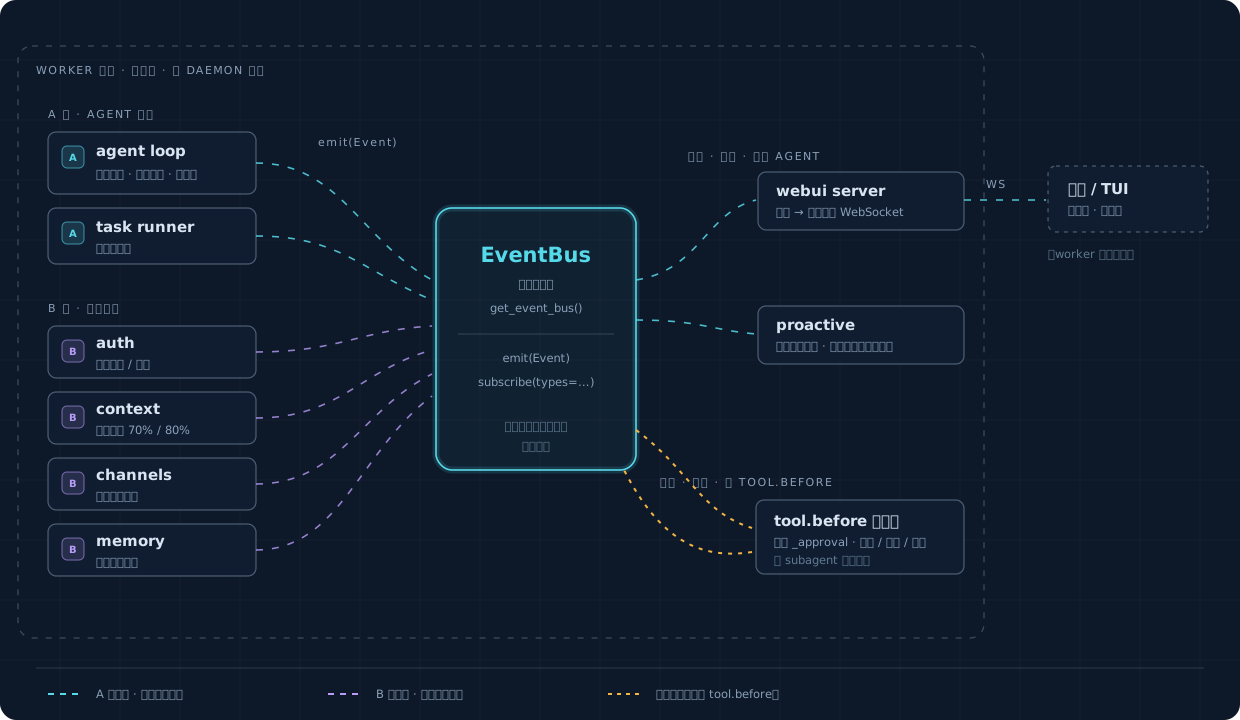
交互版本(带事件流动画的完整可视化页):
event-layer.html
- 总线是唯一中枢:源和消费者互不认识,只认总线。
- webui 和 proactive 都只是消费者,同级。proactive 是这层之上的应用,不在这层之内。
- gate 派发是唯一的同步线;其余全是异步观察。
9. 接线一览#
| 消费者侧表面 | 背后 |
|---|---|
tool_gate.register_tool_gate / decide_tool_gate / ToolGateDenied |
subscribe_gate("tool.before", ...) / emit_gate 的薄壳(openprogram/events/tool_gate.py)——公开签名不变,agent_loop 与 proactive engine 照用 |
插件 hooks entrypoint |
plugins/hooks.register_plugin_hooks 把每个 handler 按总线事件名订阅到总线——notify 事件走 subscribe,gate 事件(tool.before 和 turn.stop)走 subscribe_gate 并参与否决(返回 falsy 放行,返回理由字符串或抛 ToolGateDenied 否决,其他异常记 warning 后 fail-open) |
/goal 状态变化 |
goal._emit_goal_update 顺带 emit goal.update |
config.json hooks |
worker 启动时 openprogram.events.install_config_hooks() |
| B 类源(auth、context、channels、memory) | openprogram/events/bridges.py 桥 + 各源头 emit_safe tap |